Sensory Overwhelm, Emotional Overwhelm—or Both?
Sensory and emotional overwhelm often overlap, especially for neurodivergent people. This practical guide explores how to notice what may be loading your system and choose support that fits.
Sometimes you know you are overwhelmed, but working out why is another matter entirely.
Is the room too loud? Are your clothes suddenly unbearable? Are you upset about something that happened earlier? Is your brain trying to process six conversations, three decisions and one unexpected change at the same time?
Quite often, the honest answer is: a bit of everything.
Understanding what is loading your system can help you choose support that actually fits, rather than throwing every coping strategy you know at the problem and hoping one sticks.
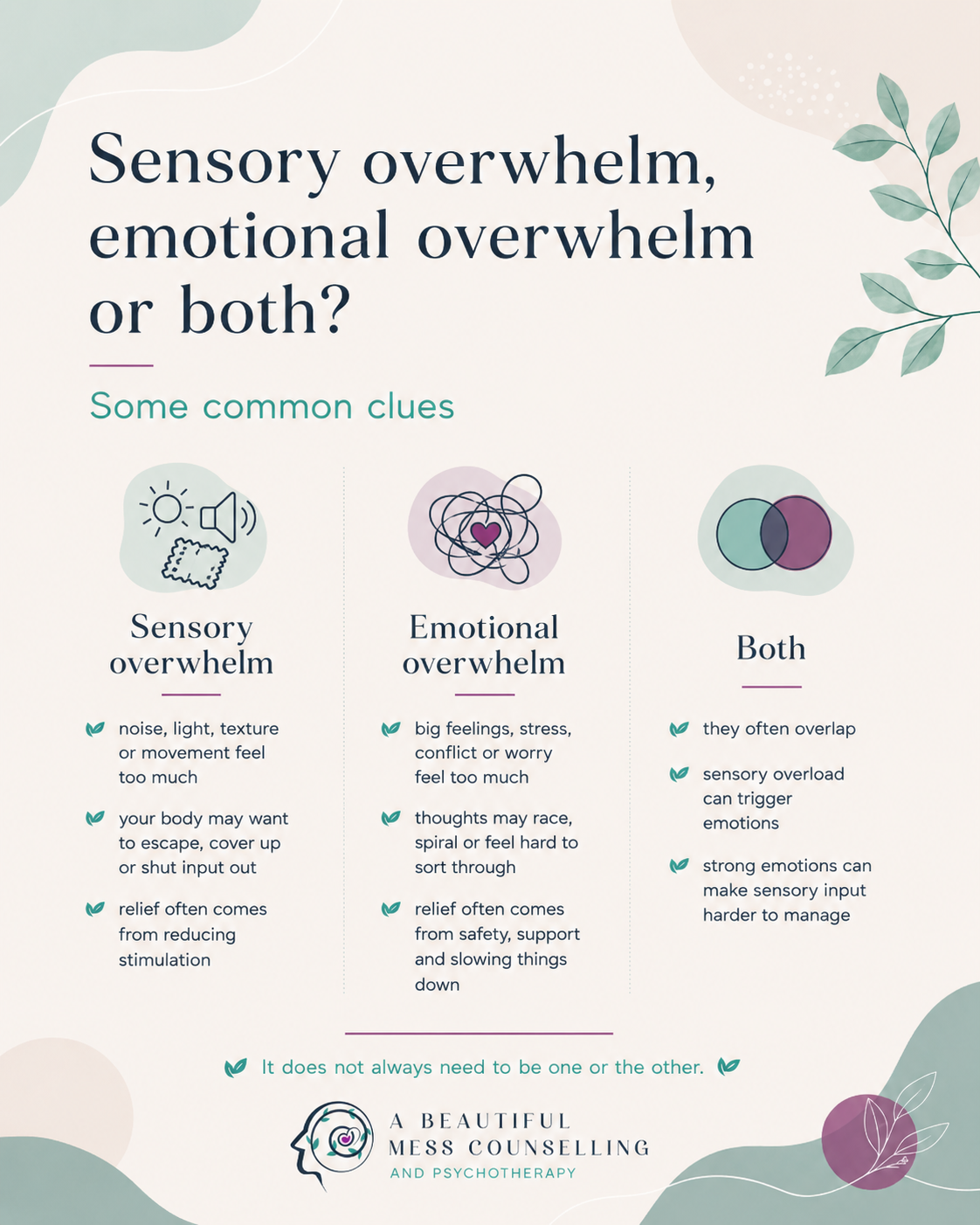
What is sensory overwhelm?
Sensory overwhelm happens when the amount or intensity of sensory information becomes more than your system can comfortably process.
This might involve:
noise, especially several sounds at once;
bright or flickering lights;
movement or visual clutter;
touch, clothing or temperature;
strong smells;
crowded spaces;
having people physically close to you.
You might feel an urgent need to leave, cover your ears, turn the lights down, remove uncomfortable clothing or stop talking. You may become irritable, quiet, restless or unable to concentrate.
Sensory differences are particularly common among autistic people. Research also suggests that children and adults with ADHD experience higher rates of sensory sensitivity, sensory avoidance, sensory seeking and difficulty registering sensory information than people without ADHD.
What is emotional overwhelm?
Emotional overwhelm happens when feelings, stress or worry become difficult to sort through or regulate.
It might follow:
conflict or rejection;
a difficult conversation;
uncertainty or unexpected change;
grief or disappointment;
feeling misunderstood;
pressure to make a decision;
trying to hold everything together for too long.
You might cry, spiral into worst-case thinking, replay conversations, feel panicked or ashamed, or lose access to words that normally come more easily.
Research consistently finds that emotion regulation can be more difficult for many autistic people, although the experience varies considerably from one person to another. Researchers are also increasingly recognising the importance of listening to autistic adults’ own descriptions of what emotional dysregulation feels like, rather than relying only on how it appears from the outside.
Why the answer is often “both”
Sensory and emotional overwhelm do not stay politely in separate boxes.
A noisy, crowded environment may leave you with less capacity to manage disappointment or uncertainty. Strong emotions can make ordinary sounds, movement, or touch feel much harder to tolerate. Autistic adults have described sensory overload and emotional dysregulation as closely connected—and, at times, almost impossible to separate.
You may also have been coping successfully for hours before one apparently small thing tips everything over.
That does not necessarily mean the final event was the whole cause. It may simply have been the last demand your system had room for.
A quick check-in
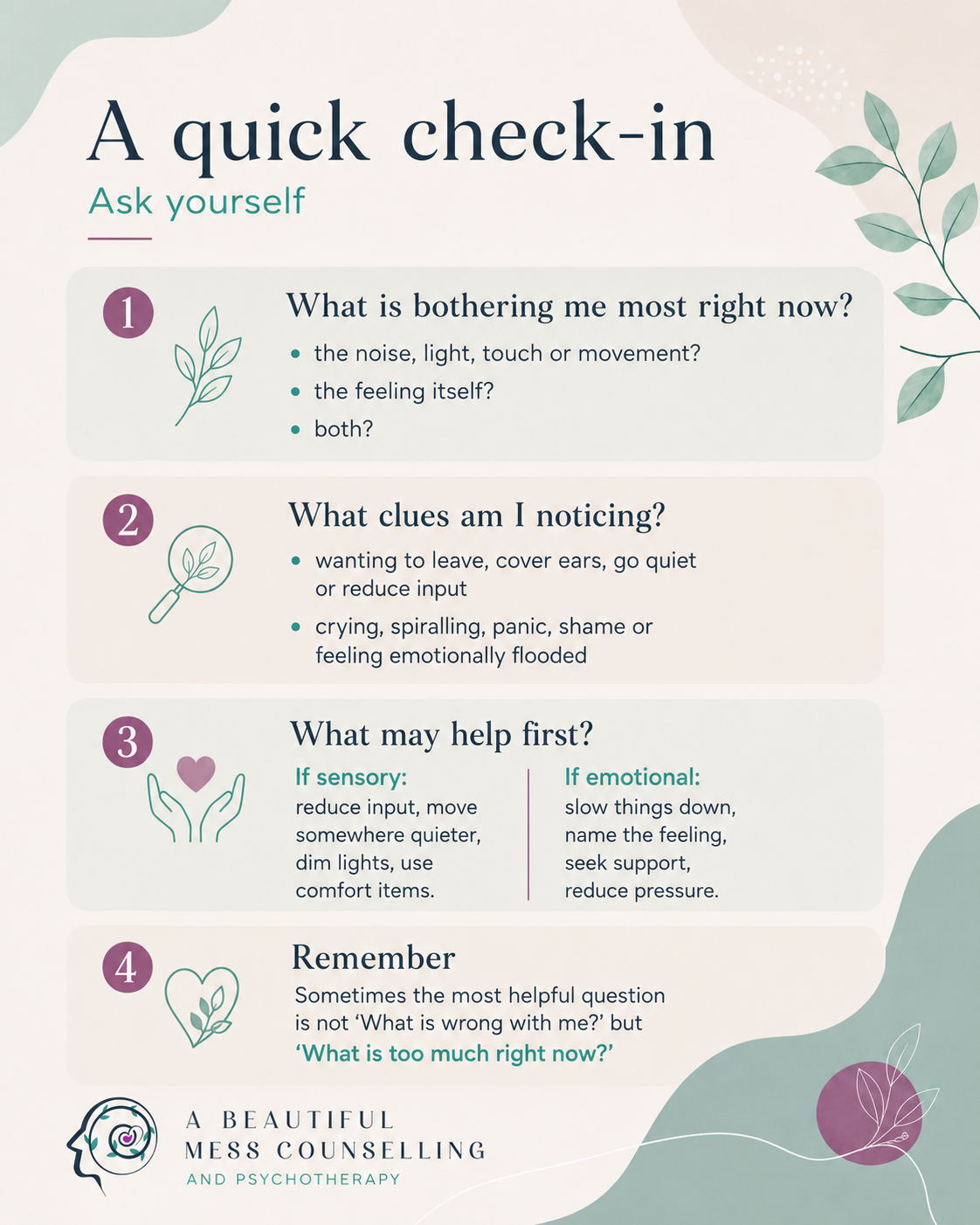
When you notice that everything feels too much, try asking:
What is bothering me most right now?
Is it:
the noise, light, touch or movement;
the feeling itself;
the number of decisions or demands;
or a combination?
What is my body trying to do?
Do I want to:
leave;
cover up or block out input;
go quiet;
cry;
move;
hide;
stop making decisions?
What changed recently?
Consider whether you have:
entered a different environment;
had an unexpected conversation;
been interrupted repeatedly;
skipped food, water or rest;
spent a long time masking;
moved directly from one demanding task to another.
You do not need a perfect answer. You are simply gathering clues.
Match the support to what is happening
When the overwhelm seems mainly sensory, try reducing input:
move somewhere quieter;
dim the lights;
use headphones or familiar sensory items;
reduce conversation;
change clothing, temperature or physical position.
When it seems mainly emotional, try reducing pressure:
slow the conversation down;
name the feeling without demanding that you solve it;
postpone non-urgent decisions;
seek support from someone safe;
give yourself time before responding.
When it is both, address the sensory load first where possible. It is often easier to understand and work with emotions once your brain is no longer battling excessive noise, light, movement or touch.
And sometimes the answer is not a five-minute break. Sometimes your system needs a quieter afternoon, fewer expectations or actual recovery after several demanding days.
A gentler question
When overwhelm hits, it is easy to ask:
“What is wrong with me?”
A more useful question may be:
“What is too much right now?”
Overwhelm is not a personal failure. It is information about the demands, environment, emotions and capacity available in that moment.
The goal is not to force yourself back into functioning as quickly as possible.
It is to notice what your system is communicating—and respond with a little more curiosity and a little less criticism.