Five Gentle Ways to Reconnect With the Present
Sometimes the present moment can feel difficult to reach.
Your mind may be replaying something from the past, racing ahead into what might happen next or becoming caught in repetitive thoughts. You might feel foggy, overwhelmed, detached or notice that your body is reacting more strongly than the current situation seems to require.
Grounding and orienting strategies are gentle ways of reconnecting with where you are and what is happening now. They are not about forcing yourself to calm down or pretending that everything is fine.
This is not a definitive guide, and not every strategy will suit every person. You can adapt these ideas, use only part of an exercise or stop if something increases your distress.
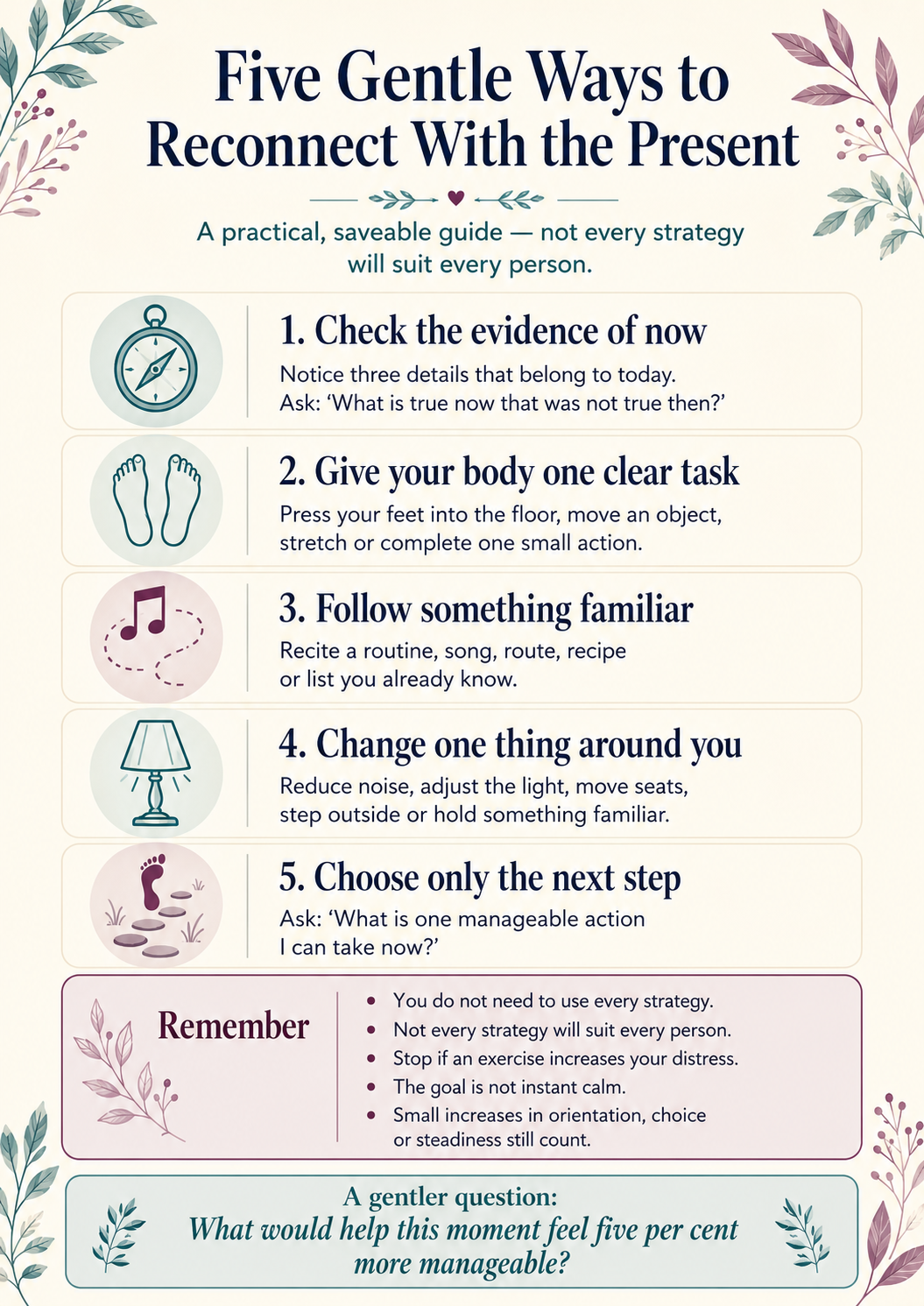
1. Check the evidence of now
Look around and identify three details that clearly belong to this moment in your life.
You might notice today’s date, what you are wearing, the room around you or something you own now that you did not have in the past.
Then ask:
What is true now that may not have been true then?
Perhaps you are older, can leave the room, have access to support or understand more about what is happening.
Choose what is genuinely true for you. You do not need to convince yourself that everything is safe or fine.
2. Give your body one clear task
When thinking feels difficult, a small physical task can give your attention somewhere concrete to land.
You might press your feet into the floor and release, move an object from one place to another, stretch your shoulders or arrange a few items into a row.
The task does not need to be productive. It simply needs a clear beginning and end.
3. Follow something familiar
Familiar information can provide structure when you feel scattered or disconnected.
You could quietly name the steps involved in making tea, remember the stops along a regular route, hum a familiar song or list characters from a favourite show.
The aim is not to distract yourself from what you are feeling. It is to give your attention a predictable pathway back towards the present.
4. Change one thing around you
Regulation does not always have to happen entirely inside your body.
Sometimes the room is too bright, noisy, crowded or exposed. Consider whether one small environmental change might make the moment more manageable.
This could mean lowering the lighting, moving to a quieter space, sitting where you can see the door, stepping into fresh air or holding something familiar.
Responding to your surroundings is not a failure to cope. It is using the information your body is giving you.
5. Choose only the next step
Overwhelm can make it feel as though you need to solve the entire problem immediately.
Instead, bring your attention closer and ask:
What is one manageable action I can take now?
It may be taking a sip of water, sending one message, pausing a conversation, putting on your shoes or deciding what can wait.
You do not need to solve everything. You are simply identifying the next point of contact with your life.
What if none of these helps?
That does not mean you are doing grounding incorrectly.
You may need a different strategy, practical support, more time or help from another person. It is also okay to stop an exercise if it makes you feel more distressed or disconnected.
Grounding strategies are supports, not tests you can pass or fail.
A gentler question may be:
What would help this moment feel five per cent more manageable?
The goal is not instant calm. Sometimes reconnecting with the present simply means noticing where you are, what is different now and what choices may be available to you.