Understanding Trauma Responses Without Judging Yourself
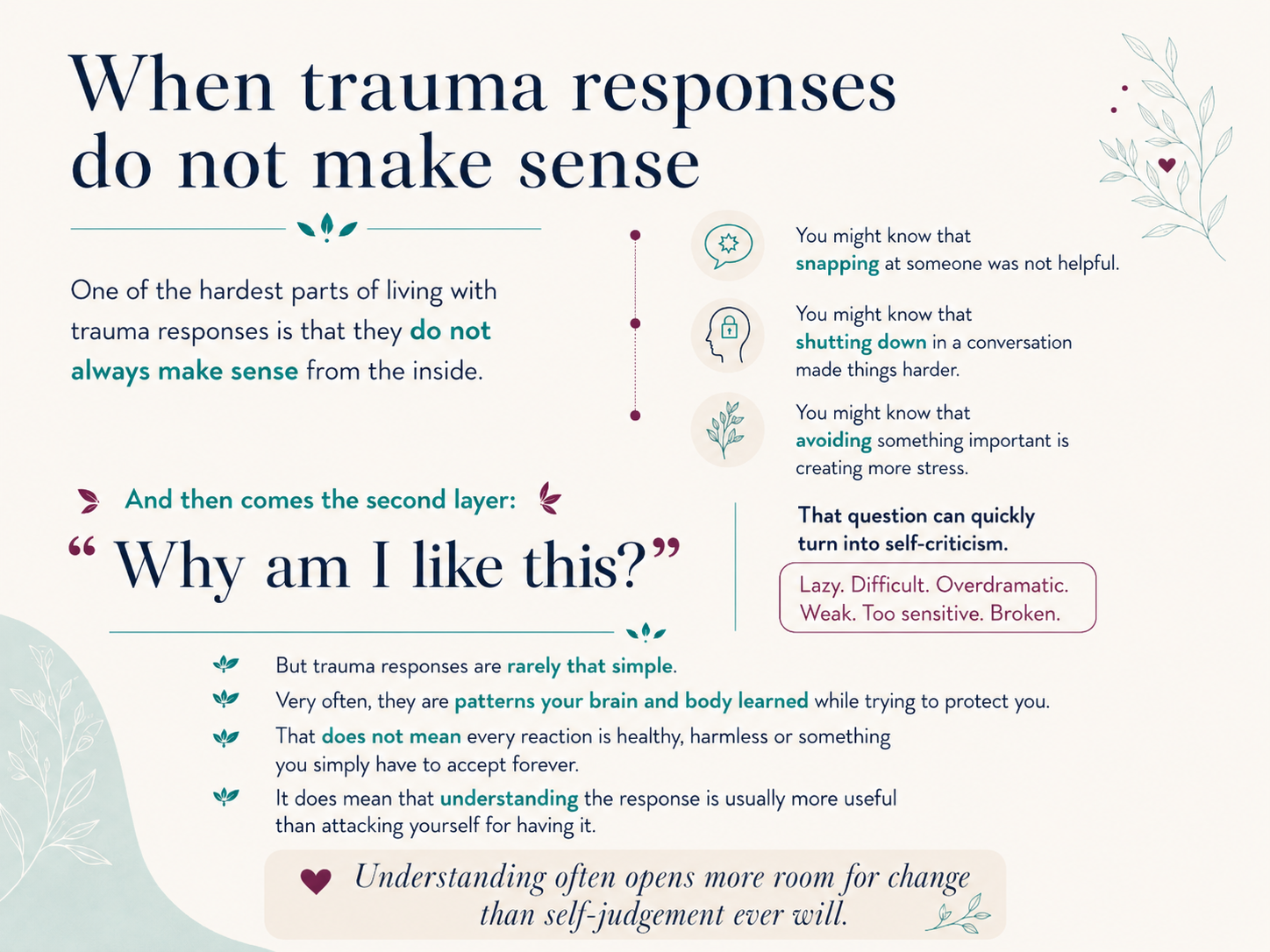
Trauma responses are not a sign of weakness
After a traumatic experience, people can react in many different ways. Some become highly alert to potential danger. Others avoid reminders of what happened. Some feel irritable or angry. Others become numb, detached or find it difficult to concentrate, sleep or connect with people. These are all recognised reactions to trauma.
Importantly, having these reactions does not automatically mean you have PTSD. Many people experience significant stress responses after trauma and gradually recover over time. PTSD is diagnosed when a particular combination of symptoms persists and significantly interferes with daily life.
So if you recognise yourself in some of these patterns, try not to leap straight to:
“Something is seriously wrong with me.”
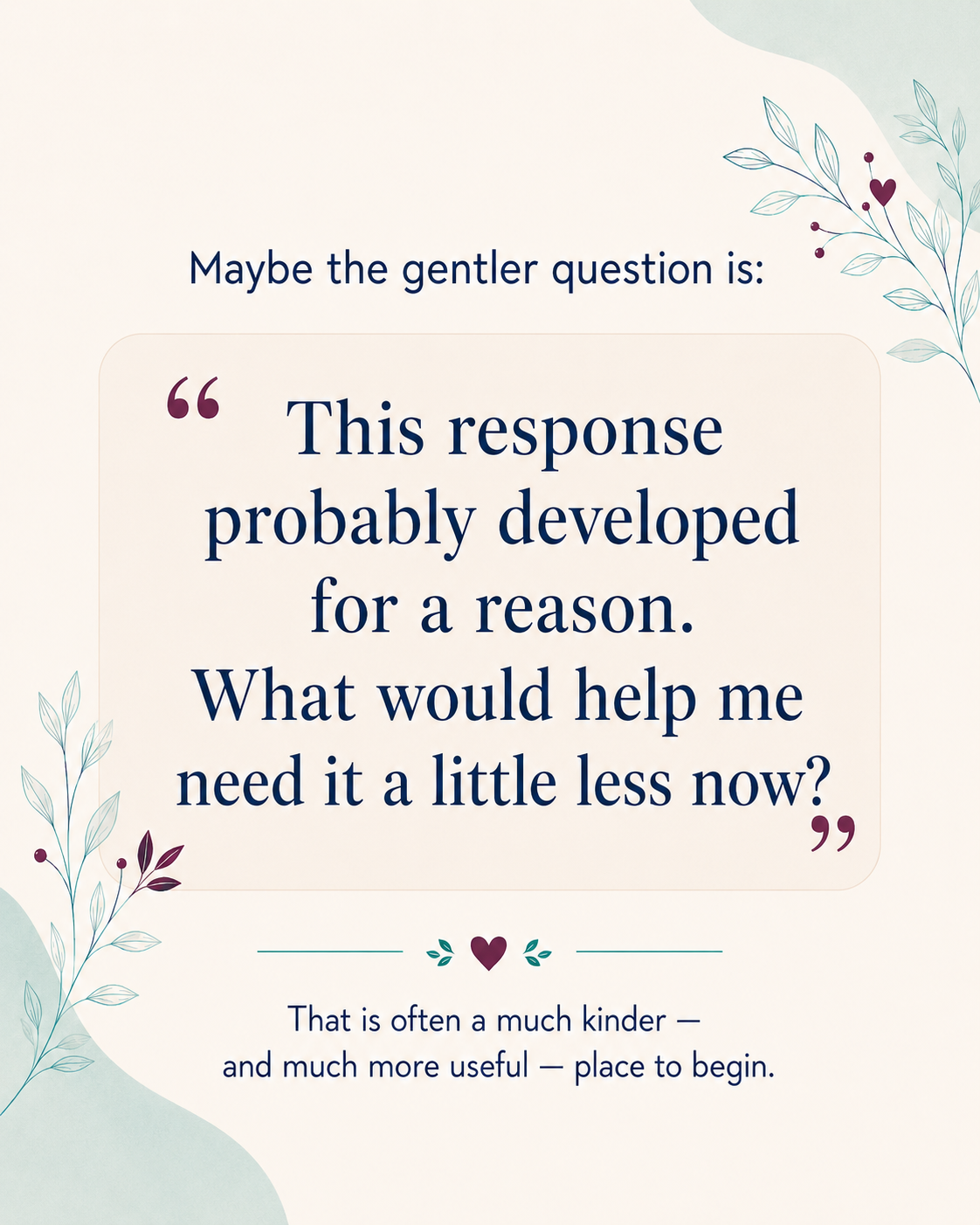
A better starting place might be:
“Something happened, and my system adapted.”
Fight does not always look like fighting
When we hear “fight response”, we often imagine obvious aggression.
In everyday life it may be much subtler.
It might look like:
becoming defensive very quickly;
feeling irritated by small things;
needing to stay in control;
arguing harder than you intended;
feeling constantly on edge.
Being irritable, easily startled or unusually alert are well-established trauma reactions.
That does not mean hurtful behaviour should be excused because of trauma.
Understanding the response simply gives you somewhere useful to begin.
Instead of:
“I am an angry person.”
you might wonder:
“What did my body think I needed to defend myself from?”
Sometimes there is a very real issue in the present. Sometimes the intensity belongs partly to something older.
Often, it is both.
Flight can look surprisingly productive
Some trauma responses are socially rewarded.
Staying constantly busy can look like ambition.
Overworking can look like dedication.
Planning everything can look organised.
Always having somewhere to go can look energetic.
And yet avoidance can include keeping yourself very busy so that you do not have space to think about or feel what happened. The National Center for PTSD specifically identifies both behavioural and emotional forms of avoidance after trauma.
This is one reason trauma responses can be difficult to recognise.
Not every protective behaviour looks obviously distressed.
Sometimes the person who never stops is struggling just as much as the person who cannot get started.
Freeze can look like “doing nothing”
Freeze responses are particularly easy to judge.
You know you need to make the phone call.
You know you need to answer the email.
You know what you want to say during the argument.
And yet nothing happens.
Your mind goes blank.
Your body feels heavy.
Words disappear.
You sit there thinking:
“Just do it.”
But you cannot seem to move.
Difficulty concentrating, making decisions, feeling detached or going numb can all occur after trauma.
This is where self-judgement can become especially cruel.
Because from the outside, freeze can look like avoidance or lack of effort.
From the inside, it can feel more like:
“I cannot access what I normally know how to do.”
That distinction matters.
Sometimes protection means disconnecting
Not every trauma response involves feeling more.
Sometimes it involves feeling less.
A person may feel emotionally numb, disconnected from themselves, detached from other people or as though their surroundings are somehow unreal. Dissociation is a recognised feature of some trauma-related presentations, including a dissociative subtype of PTSD.
That experience can be frightening in its own way.
People often judge themselves for not reacting “properly”.
“Why am I not crying?”
“Why don't I feel anything?”
“Why do I feel like this happened to somebody else?”
There is no correct emotional performance after trauma.
Feeling numb does not mean you did not care.
Feeling detached does not mean the event did not affect you.
Sometimes disconnecting is itself part of how the system copes with something overwhelming.
Avoidance makes sense — and can still keep us stuck
This is one of the uncomfortable parts.
Avoidance often works really well in the short term.
If something reminds you of a traumatic experience, avoiding it may reduce distress immediately.
Of course your brain notices that.
“I felt terrible.”
“I avoided it.”
“I felt better.”
Problem solved.
Except sometimes the cost appears later.
When avoidance becomes the main way of coping, it can restrict life and make recovery more difficult.
This is where compassion and change need to exist together.
You can say:
“It makes sense that I learned to avoid this.”
and also:
“I do not want avoidance making every decision for me.”
Those ideas are not contradictory.
Your response may be different in different places
People sometimes talk about “my fight response” or “my freeze response” as though each person gets assigned one.
Real life is messier.
You might become very agreeable with one person and argumentative with another.
You might freeze during conflict but stay endlessly busy afterwards.
You might be hyper-alert in public and collapse into exhaustion when you get home.
Trauma symptoms can vary over time and may become stronger around reminders of what happened.
So rather than trying to decide:
“Which trauma response am I?”
I find this question more useful:
“What does my system seem to do when it does not feel safe?”
That leaves much more room for complexity.
Understanding does not mean excusing everything
This part matters.
Trauma can help explain behaviour.
It does not automatically make every behaviour acceptable.
If someone is being harmed, repeatedly controlled or treated badly, “it is my trauma response” is not enough.
Understanding the protective function gives us more options for changing the pattern.
It might mean learning to notice the moment before anger escalates.
Recognising when a people-pleasing “yes” is actually a frightened “no”.
Learning to pause when your first impulse is to disappear.
Building enough safety that you can remain present during a difficult conversation.
That is very different from saying:
“This is just how I am.”
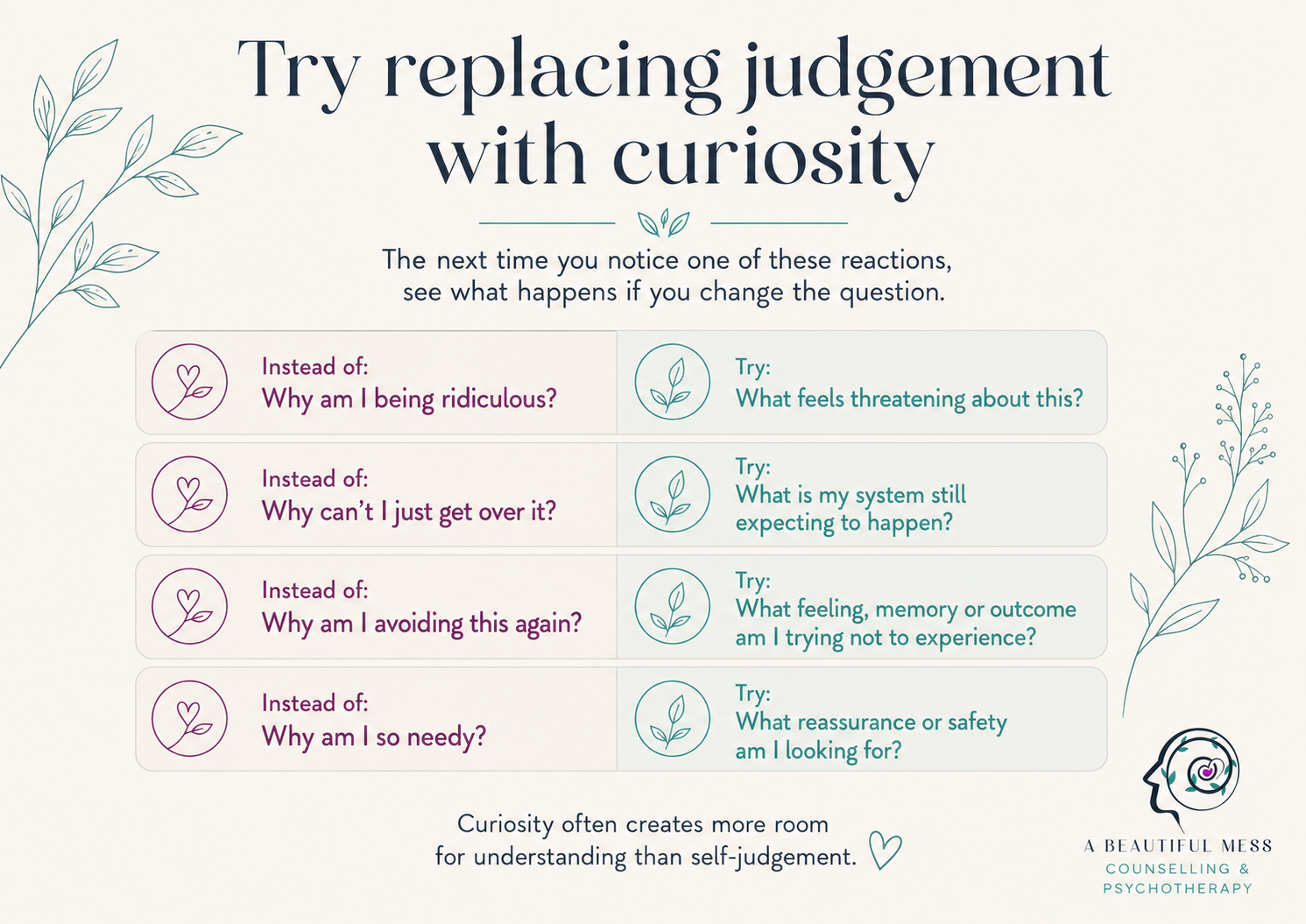
Curiosity does not remove responsibility.
It simply gives you better information.
And it is much easier to change a pattern once you understand what the pattern is trying to accomplish.
You are allowed to move slowly
Recovery from trauma is generally gradual rather than instant. Many people improve naturally over time; others need additional support when reactions continue to interfere with relationships, work or everyday life.
There is no prize for understanding yourself fastest.
Sometimes progress looks like recognising a response ten minutes earlier than you used to.
Sometimes it is saying:
“I think I am shutting down. Can we pause?”
Sometimes it is noticing that you are apologising automatically.
Sometimes it is realising you have spent the entire day staying busy because sitting still felt too uncomfortable.
Those moments matter.
They create a little more space between what your nervous system automatically does and what you want to choose next.
And that space is important.
A final thought
Trauma responses can be frustrating.
They can affect relationships, work, sleep, decision-making and how you see yourself.
But they are not evidence that you are fundamentally flawed.
They are responses.
Learned patterns.
Ways of surviving circumstances your system once experienced as too much, too dangerous or too difficult to escape.
You do not have to romanticise them.
You do not have to be grateful for them.
And you do not have to shame yourself for having them either.